The first thing I recognize as I open my eyes is my friends Nina and Amy, who shake me and abruptly wake me up. I stretch myself out of the backseat of our beloved VW Bug to see why they are so upset. Around us, there s a disarray of cars and people mangling around, honking, yelling, and arguing, and then just in front of us stands a line of military jeeps and trucks, soldiers, and barbed wire barricades. We’re stuck in the ensuing traffic jam because the highway is cut off in the middle of a field. Bulldozers are tearing up a section of tarmac, and a large tank is pointing its gun at us.
As most cars hastily make U-turns, we remain in stasis, maybe too naïve, indifferent, or tired to react to much more. There’s no desire to turn around anymore, as so many times before during the overnight drive this far onto this field. For now, our nod in consensus is that waiting is the only option. We are on a mission to visit our good friend Miro at his house in Požega, a small village in the middle of Serbia, Yugoslavia. Though our parents were told the trip was to Italy so they wouldn’t worry.
Through back-and-forth bedlam and shouts of the soldiers and the drivers, we wonder whether the looming civil war between Serbia and Croatia—or was it Herzegovina—had broken out. The Slavic language sounds confusing and harsh; we don’t know if they are arguing or bonding. Often, they articulate forcefully, pacing hand gestures back and forth, asserting the dominance of their self-aggrandized male egos.
One of the army guys looks in charge because he has more star-shaped buttons on his uniform. He had decided to mark this territory as the latest front and this open field as the new border to Serbia. The drivers of the stopped cars explain that they are trying to return to their families, and this convinces the soldiers to let a few civilian cars pass through a makeshift cordon. We tag along in line with those cars, trying to blend in and attract as little attention as possible, avoiding any noise from my old VW Bug. The first gear is broken, but even Amy, now at the helm, has gotten ok at getting going in 2nd gear without lurching. When we pass the soldiers, they look bewildered into the windows and see two young women in the front seats and a tall teenage boy in the back. By the time they realize potentially something suspicious about us, it is too late; we are on our way. The road becomes calmer and quieter as I fall back asleep during this last leg of the journey to Požega, roughly midway between Belgrade and the coast.
A few days earlier, I telephoned Miro in Požega long-distance. I recently bought my first car, an old, used VW Bug, but the brakes sometimes did not work. We planned to fix it near his house in Serbia, a state in Yugoslavia. “It would be cheap,” he said, and “combine it with a vacation.” Miro said it was safe to come, laughing off the threat of a civil war, and added, “Bring something to smoke.” I was a little more skeptical because the eight o’clock news, the one that every German watches, had shown scenes of President Milosevic directing tanks to attack protesters outside of the parliament. Miro said this is the Western view of things. He gets agitated about how Serbiens are vilified. The fall of the Iron Curtain compounded the financial problems of the vassal states around the Soviet Union hard and opened old wounds of nationalist sentiments. It seemed like all sides were waiting for something to explode. Would it be safe to go? Miro should know best. I trusted him to let us drive into a zone of imminent peril.
At the time of the phone call, my best friend Nina was hanging out with me in a room I rented (fun fact: Freiburg’s eventual Bundesliga Fußball coach Christian Streich rented it after me). As we smoked weed, I suggested she come with me, and she spontaneously agreed to tag along on this trip to Yugoslavia. I love hanging out with Nina since I had a bit of a crush on her; this would be fun. The next day, we packed a few changes of clothes into the VW Bug and started driving. The dashboard has a postcard of Jim Morisson next to another one of some pope. The car’s radio was broken, so we replaced it with a ghetto blaster that played our tapes even bolder as we headed southeast. Nina plays deep house music from New York, like Masters At Work, and complains about how our mutual friend likes this minimal stuff, or techno, which is still all Krautrock to her. As we switched driving after a few hours, we both raced the old VW like Niki Lauda, tallying a list on the dashboard, with each of us getting a point each time we overtook a Mercedes on the Autobahn. Nina always won, so we reached Munich fast that night, our first overnight stop, where we stayed at the apartment belonging to our high school friend, Amy, who moved to Munich to study journalism at the university.
That night, it didn’t take much to convince Amy to accompany us on the trip: we needed a copilot to navigate the heavy ADAC road map atlas (to Germans, this has religious status), while the third could nap in the back seat. Amy’s semester hasn’t started yet, and she has a few days off and is also looking for new stories to write, too. The following day, the three of us kept racing towards the Austrian border until initiating braking procedures —a great idea to fix those breaks on the other side of the Alps— towards a gas station, a pit stop to refuel. We want to fill our lovely VW Bug up before crossing the border. Here, we can still pay in German marks. The gas station is small and located along a narrow curve adjacent to the Autobahn.
As we stepped out of the car, we realized that motor oil gushed from the overheated, hissing engine. The gas station attendant ran out with sawdust, shouting furiously at us about the oil spill he now had to clean up. We also blocked other customers’ paths, drawing scowls as we grumbled and scrambled to get out of the way.
Just then, a loud bang shattered the chaos, freezing everyone in their tracks. A devastating accident had struck the Autobahn’s narrow curve—a car flipped violently multiple times before slamming into the guardrails as it tumbled out of control. The gas station attendant rushed inside to call an ambulance. Luckily, the driver of the accident’s car miraculously climbed out unharmed but immediately collapsed from shock. Nobody cared about the oil predicament. We pushed our car to the parking lot.
As we debated, another onlooker agreed that VW Bugs are indestructible: “Just put more oil in it.” Germans and VW Bugs are One Love; we bought oil in the shop, drove away before the gas station guy got madder, and reached the Austrian border minutes later. We each took one stick of hashish into our mouths to swallow in case we got pulled over, but luckily, the border guard waved us through. It was starting to get darker. Our mood was gloomy, too, after the oil disaster and that scary accident, so we made a big decision to turn around back to Munich to have the car checked. In the mountains, finding a phone for road assistance would be risky. So we passed the border guard in the opposite direction into Germany this time, mouths loaded. Not racing any Mercedes anymore, the car ran smoothly, and after another pit stop to recheck the motor oil, it all looked fine. With the new oil, the motor was running like butter. We decided to risk it all and turned around —yet again— passing the accident scene, putting in eyedrops, and returning the sticks into our mouths as we approached the border guard. This time, he pulled us over as our hearts started to race. I had to open the door (the window doesn’t work). His instructions were to turn on our lights; oh yeah, by now, it was really dark—no need to swallow the drugs.
The girls insisted this calls for rolling a big spliff. As we drove deeper into the Austrian Alps, the towering mountain ranges rose around us. The motor continued to run smoothly, but it was calming down now, as it felt like we were starting to climb higher. Darkness enveloped us. The girls began to nod off as I drove. The road narrowed, the turns grew steeper, and without a copilot, I probably missed the turn to the tunnel. Instead, we climbed higher and higher. It was too far in and too high to have turned back now. Did I mention that the first gear is broken? On the steepest inclines, I’m forced to turn around and drive up the mountain in reverse. It felt surreal, but there was no one around to witness it. Sometime in the middle of the night, close to the clouds, I steered the car up the last mountain peak—and somehow, it made it.
Just as the summit came into view, I had to stop at a barrier. I woke the girls. We’ve reached the Yugoslavian border.
A guard in a small hut emerged, inspecting us for what seemed like an eternity. He was confused—who drives into Yugoslavia over a mountain pass in the dead of night, on the edge of a civil war? Eventually, he asked for our papers and ordered me out of the car. I lean back, passing my bit of hash to Amy in the backseat before stepping out to talk. The guard, barely older than us, demanded a 120 Mark insurance fee to let us through—in Western cash—a bribe, or as Miro later explains, that since the government was crumbling, the border guards likely hadn’t been paid in months. We were not turning around after all this, so I handed him the cash. It set us back, though; we only had a few hundred in cash each. Still, as we drove down the mountain, the sun rose, painting the peaks in golden pink. The valley below unfolded before us in breathtaking beauty.
But I was getting worried. The remaining brake was overheating as we descended and was failing—intermittently. I used the handbrake then, which was terrifying on the steep, winding descent down the other side of the Alps. The girls woke up as we rolled into the first town in the valley. The morning had broken, but we immediately got lost and ended up on a muddy road that turned into less and less of a road and a sketchy-looking neighborhood. We proceed cautiously, too nervous to ask for directions. At times, crowds gather around, peering into the car, adding to our unease. Relief flooded us when we found the main road again.
Amy took the wheel so I could get some sleep after driving all night. We must have been close to Serbia now. For the moment, everything seemed uneventful and calm. But my sleep was fleeting—barely a few minutes. What looked like a regular traffic jam at first was a makeshift checkpoint, and the girls woke me, somewhat alarmingly, by pointing out the tank ahead of us—it’s that barrel aimed directly at our car.
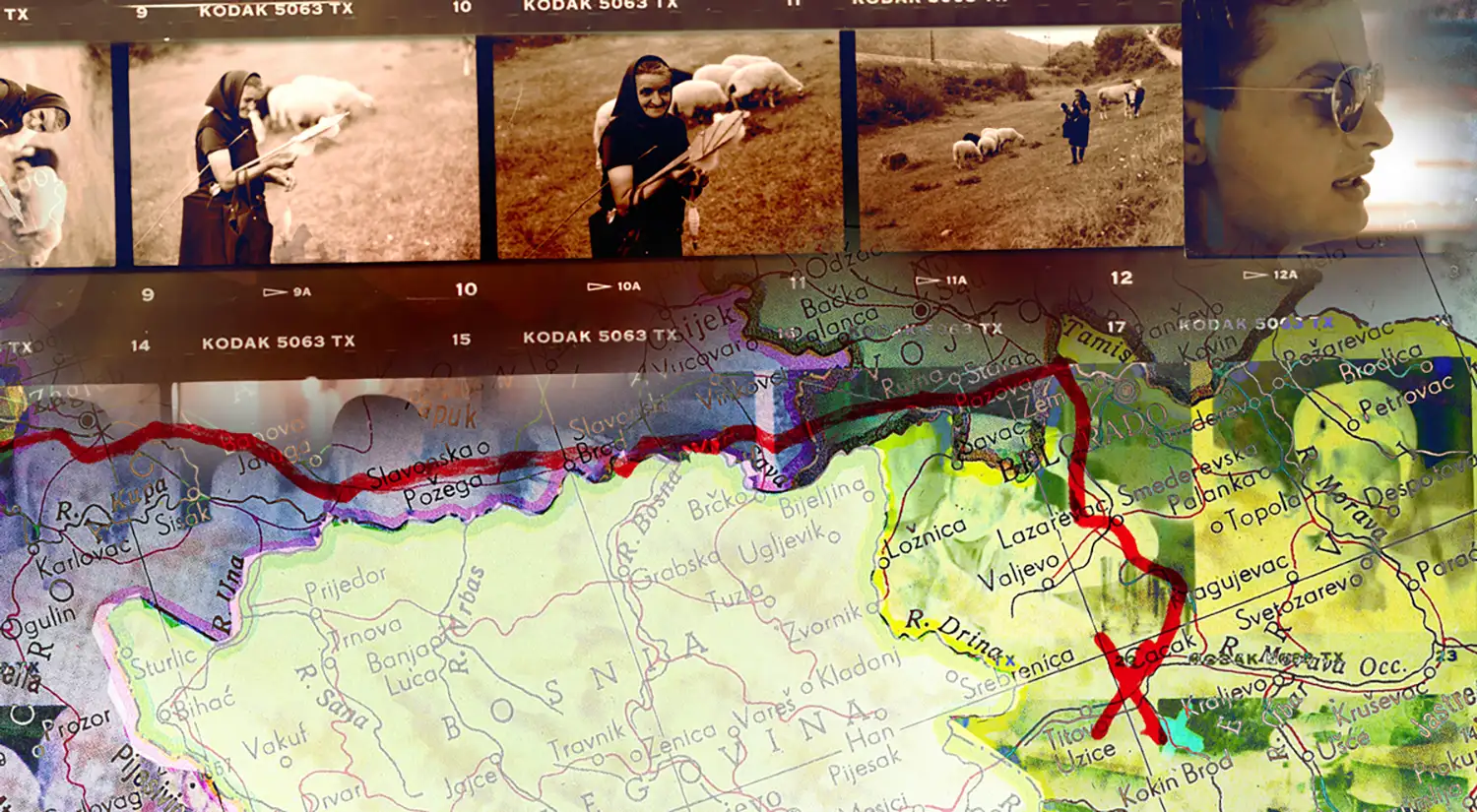
So, this was where we were at the beginning of this story. Over the years, I told many of my friends this story over glasses of wine, coffee, or dinners, and they told me to turn it into a movie (too expensive) or write a novel (here we are).
The rest of the journey from the checkpoint to Miro’s house passed without further interruptions, just pleasant countryside. We rolled into Miro’s village and somehow found his house with a hand-drawn map his sister in Freiburg had given me. We arrived and cooked dinner, probably using vegetables from the garden and the farm next door. Then, we smoked and listened to his vinyl record collection before falling into deep sleep.
We knew Miro from the nightclub called ‘Agar,’ which means ‘futile ground,’ where I worked as a bartender in Freiburg, a city with a historic university (1457) on the southern border of Germany. The club caters to the mainstream student population. It has a huge white marble dance floor and an acclaimed sound system. Although this club was built by Sanjasins —followers of the Indian cult leader Osho who lived in communes and wore shared red clothes during the day— it was pretty cheesy. ‘Pump up the Jam’ and other ‘90s dance anthems played on heavy rotation. Miro had no money, but he showed up because I gave him free drinks, and he looked good; my boss, the club diva Deepa, had a crush on him. Nina did, too; I had a crush on Nina, but she wouldn’t have come to this bougie club anyway. After the club closed at four or five in the morning, we often drove to acid raves held at illegal locations like abandoned military airplane hangers or the many crumbling castles around Freiburg. Miro often drove; sometimes, he hung his head out the window to get a fresh breeze to sober up. Once, we got caught by the cops as we broke in and skinny-dipped at a hot spring pool, but the cops knew me from the club and called a few taxis to take us home because they were afraid that we all had too much to drink to drive.
When Miro was in Germany, he lived at his sister’s apartment or odd sublets through friends or work. I remember he had a stint as a supervisor for a friend’s hotel renovation. There, he shuffled from hotel room to hotel room. Other times, he worked all sorts of handyman jobs in Germany, many of which he didn’t finish, for which he often got sued. His life was notoriously chaotic. He had no sense of time and was naïve to promise things he couldn’t deliver. He spent the summers in his house in Yugoslavia, driving a fast BMW without seat belts. He wouldn’t get a ticket since his friends own this town like kings, and half of the policemen rent from Miro’s friend Duško. They parked in the middle of the sidewalk because they could.
Day One:
There wasn’t much to do in Požega, but Miro and his friends tried to make up for it by showing us around. I drew the neighbor’s shed, who was embarrassed by its decrepit state but tried to get me to marry his daughter. In the evening, we hiked up a mountain to an old woman’s farm, where she sold us fresh butter and goat cheese as much as we could carry down in buckets.
Day Two:
Our goal was to find gasoline. It’s a precious item, but we had Marks, the German valuta, which gave us several canisters. We bought as much as we could to get back to Germany eventually. Next, we dropped off the VW to get the breaks fixed. They have become so bad that we initiated the breaking procedure early while rolling into town, with one traffic light in the middle square. The mechanics said it would take a few days, and we stayed hopeful without ever understanding a word about the transaction between Miro and his mechanic friend.
We tried to cook that night because restaurants were closed. The markets and stores were empty because of the embargo, but Miro had connections and found an abandoned grocery store with some packs of dried pasta, and they had palettes of cans with mushrooms. Miro seemed to buy the rest of the goods in the store, enough canned mushrooms to last us. There were plenty of vegetables and some rabbits in the neighbor’s garden. We invited friends. We cooked up a storm for everyone who came over, but their appetite was disappointing. Later, we mentioned that to Miro, and he said they all had dinner with their families beforehand. They just ate to be polite. At times, these etiquettes seemed to leave us lost in translation.
Day Three:
All day, we sit in Duško’s cafe and smoke. We noticed one peculiarity: Inflation was so high that the waiters jokingly carried one bundle of banknotes in each pocket. The police abandoned their station because they hadn’t been paid. Wherever we went, they talked to the waiters in Slavic— and we think they were arguing. We can’t possibly decipher their male Slavic honor codecs.
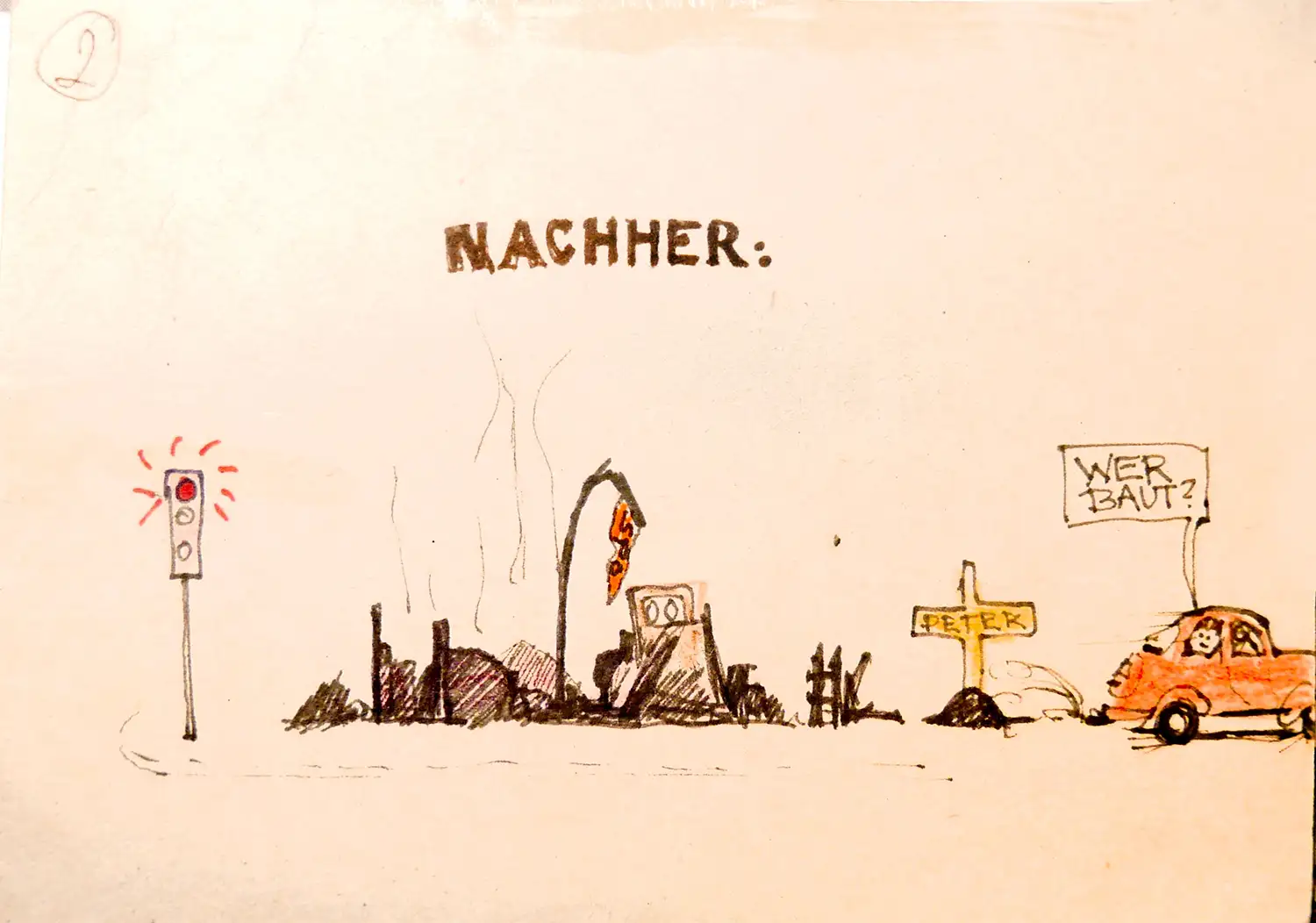
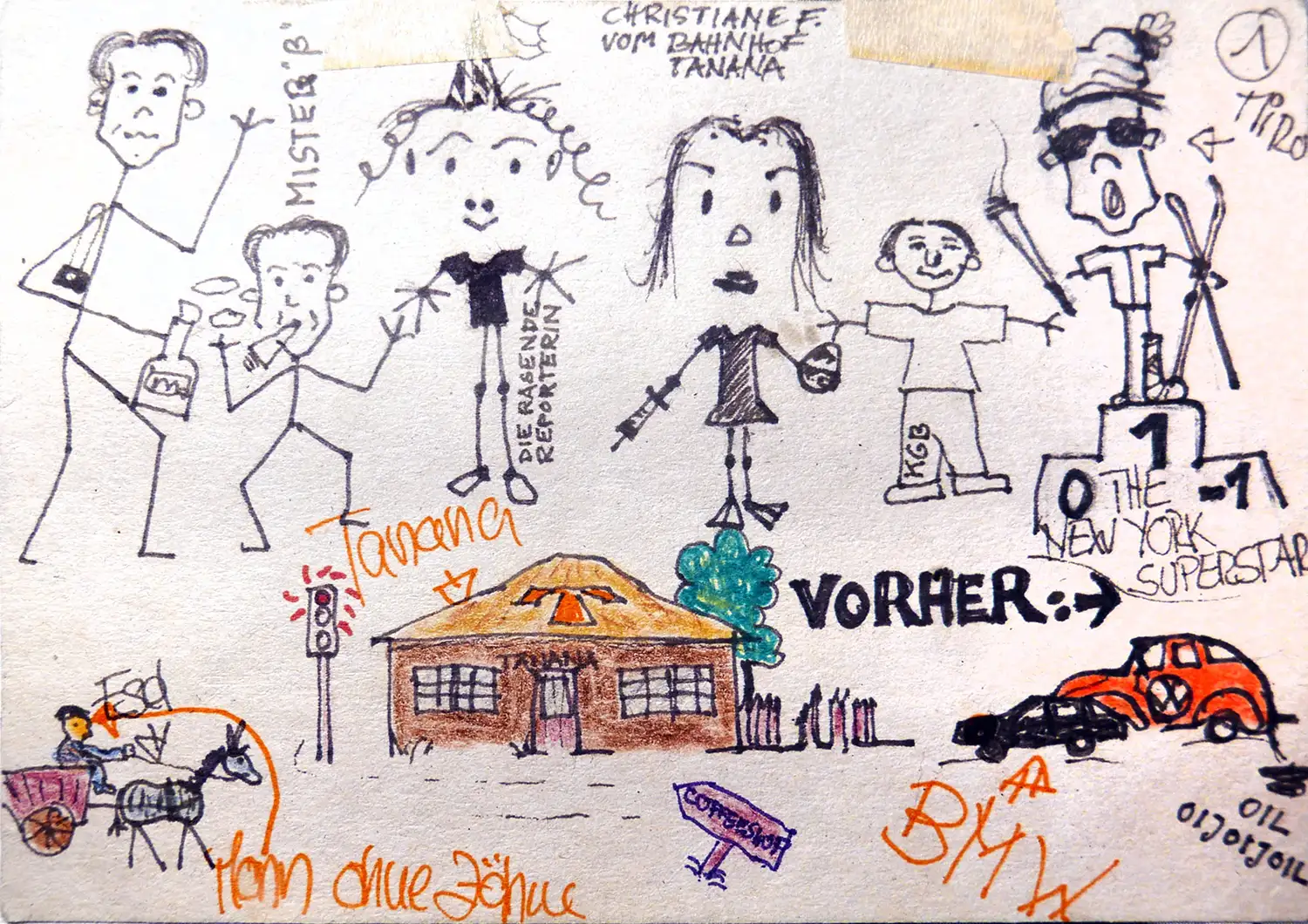
At night, we hang out in Peter’s bar, another good friend of Miro’s. It’s more like a hut, and he called it “Tanana,” with a big “T” painted on the roof, even though we never found its meaning. Jonny Walker Whiskey was one item that seemed to be excluded from the embargo, and we drank apple juice and beer to wash it down. The boys in town catered to us like celebrities, yet the village girls are kept safe inside their families’ homes. That means Amy and Nina are the only girls. Amy accidentally kept tipping off her cigarette ash onto Duško’s pants. He didn’t say anything, too awe-struck or too polite or shy to tell her until someone pointed it out, and we broke down laughing hysterically.
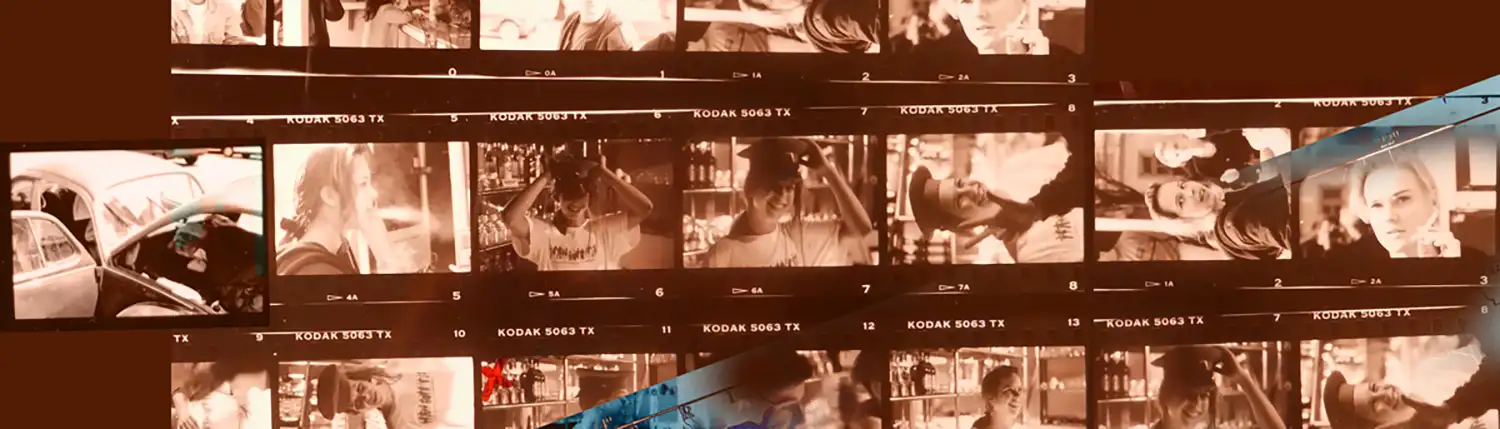
Some army generals step into the bar. Slobodan Milošević’s cronies also wanted Peter because he hosted a popular progressive radio show for the opposition, but these soldiers were regulars and friends of Peter. We drank with them and took photos wearing their military hats (see first page of the story). We raised our beers for a toast. The labels display a map of the Yugoslavian states, and we asked where they think the borders should be drawn. They said the bottle could use a bigger label. They didn’t believe a wider war was coming—after all, here we are, sitting together, Serbian and Bosnian neighbors, sharing a drink. Then, a few months later, they massacred each other.
Day 4 and 5, and probably up to two more weeks:
The days were starting to blend into a daily loop: sleeping in late, then Miro and I taking a quick ride to check if the mechanic had made progress. After that, we picked up Nina and Amy and sat down to smoke and drink coffee at Dusko’s cafe. Towards the evenings, we headed over to Peter’s bar. One night, we became hungry and headed to a local food truck. Their specialty and only meal was tripe and other freshly slaughtered innards. While we were hungry, we almost gagged. We were still partly vegetarian and preferred the freshly baked bread, which was delicious.
Another night, everyone tagged along as we drove to Belgrade to a concert for a band I had never heard of —it turned out to be the loudest concert ever. Most people stood outside the concert hall, and no one dared approach the speakers. I didn’t know how the band could play like this. The music was mediocre, and Belgrad seemed cold and gray at night— but people still partied despite the civil war, inflation, and lawlessness. Around the corners, gangs of thieves lingered. They send little kids to snitch a small item while a backup and faster runner grabs luggage and left unattended while chasing after the kid, an old trick. We were happy to return to the countryside’s safety in Požega.
We used Miro’s car all this time while the VW was stuck at the mechanic’s shop. Eventually, the mechanic’s laziness made Miro agitated over what appeared to be an argument. Two days later, the car was fixed. I don’t think we paid much for the repaired breaks because Miro bargained with them about their shoddy service.
Somehow, there was some deal with the lazy mechanic. It all happened in Serbian. I stood around with nothing to say as Miro argued and waved his hands while the mechanic stifled and seemed to shrink more and more into nothingness. As we finally drove off, I asked Miro how much I owed. He shrugged it off and said that we didn’t have to pay for anything here. As we drove off, we got drunk at Peter’s bar as usual—full glasses of Johnny Walker and beer.
At least we got the car back and could return to Germany. At some point in the middle of the night, we had another glorious idea: as a last bang to Yugoslavia, it would be fun to go skiing. It’s not a huge detour to pass through the mountains. As I raced through the night to keep up with Miro’s car, it took about four hours to reach a resort in the hills called Kopaonik, which we quickly coined Kaputnik. At the break of dawn, we checked into the only hotel that was open and took a room for a few hours of rest. It is built in Soviet-era brutalist architecture, with heavy blocks of exposed concrete, monolithic and monumental. There was one restaurant open in the resort. We aren’t surprised anymore that the meal they serve is canned mushrooms and nothing else. Of course, we were almost the only guests; who would go skiing during a civil war? But a single ski lift was running. When we finally got our gear together, we had only about an hour left before they closed the lift.
Nina, Amy, and I are experienced skiers since we grew up in Freiburg, close to the slopes. Miro, however, was new to this sport and was suffering. Hungover and tired, he was getting beat up from tumbling down this forlorn slope. Meanwhile, Amy, Nina, and I rolled into the snow at the bottom, cracking up uncontrollably until we were all cold and likely dreading another round of canned mushrooms for dinner that evening.
None of us know how we got home after this.
before:
after: